Reviewed and updated: September 4, 2026
By Hitesh Taneja, Co-Founder, 500.Marketing
ChatGPT Ads are now available to eligible advertisers in India through OpenAI Ads Manager Beta. Businesses can create campaigns, select CPM, CPC or conversion-optimized CPC objectives, target supported locations and platforms, add conversational “context hints,” publish image-and-text ads, and measure outcomes using the OpenAI Measurement Pixel or Conversions API.
That is the short answer. The more important question is whether ChatGPT Ads deserve a place in your media plan—and how to test them without treating a new channel like a proven replacement for Google or Meta.
This guide explains what has launched, how the platform works, which businesses are a good fit, what it costs, how to build and measure a campaign, and where advertisers should remain cautious.
Important: ChatGPT Ads and Ads Manager are still in beta. Features, policies, formats, inventory and availability can change. Check the linked OpenAI documentation before launching a campaign.
Key takeaways
- OpenAI launched self-service ChatGPT Ads access in India on August 31, 2026.
- ChatGPT Ads appear separately from the organic answer and are labelled Sponsored.
- Ads may appear to eligible adults using ChatGPT Free and Go; Plus, Pro, Business, Enterprise and Education accounts are currently ad-free.
- ChatGPT Ads are selected using conversational relevance, campaign inputs and bids—not conventional exact-match keyword targeting.
- Advertisers can currently choose CPM, CPC and conversion-optimized CPC objectives.
- The published minimum daily budget for an INR ad account is ₹725, but that is a platform minimum, not a recommended performance budget.
- OpenAI does not yet publish dependable industry-level CPC, CPA or ROAS benchmarks.
- The best early candidates are businesses whose customers research, compare, evaluate trade-offs or seek recommendations before acting.
- Policy eligibility is narrower than on mature ad platforms, particularly for health, finance, legal services and other sensitive categories.
- ChatGPT Ads should initially be tested as an additional source of demand—not used as an automatic replacement for Google or Meta Ads.
Are ChatGPT Ads available in India?
Yes. On August 31, 2026, OpenAI announced self-service access to ChatGPT Ads across India, Europe, the Middle East and North Africa. OpenAI’s current Ads Manager availability page lists India as Available.
Advertisers can sign up at ads.openai.com. Creating an account does not guarantee immediate campaign delivery: the business, account and billing details must be completed, and the advertiser may need to pass account verification and ad review.
This distinction matters. ChatGPT Ads are available in India, but the platform remains in beta. Advertisers should expect the interface, buying options, targeting, inventory, measurement and policies to evolve.
What are ChatGPT Ads?
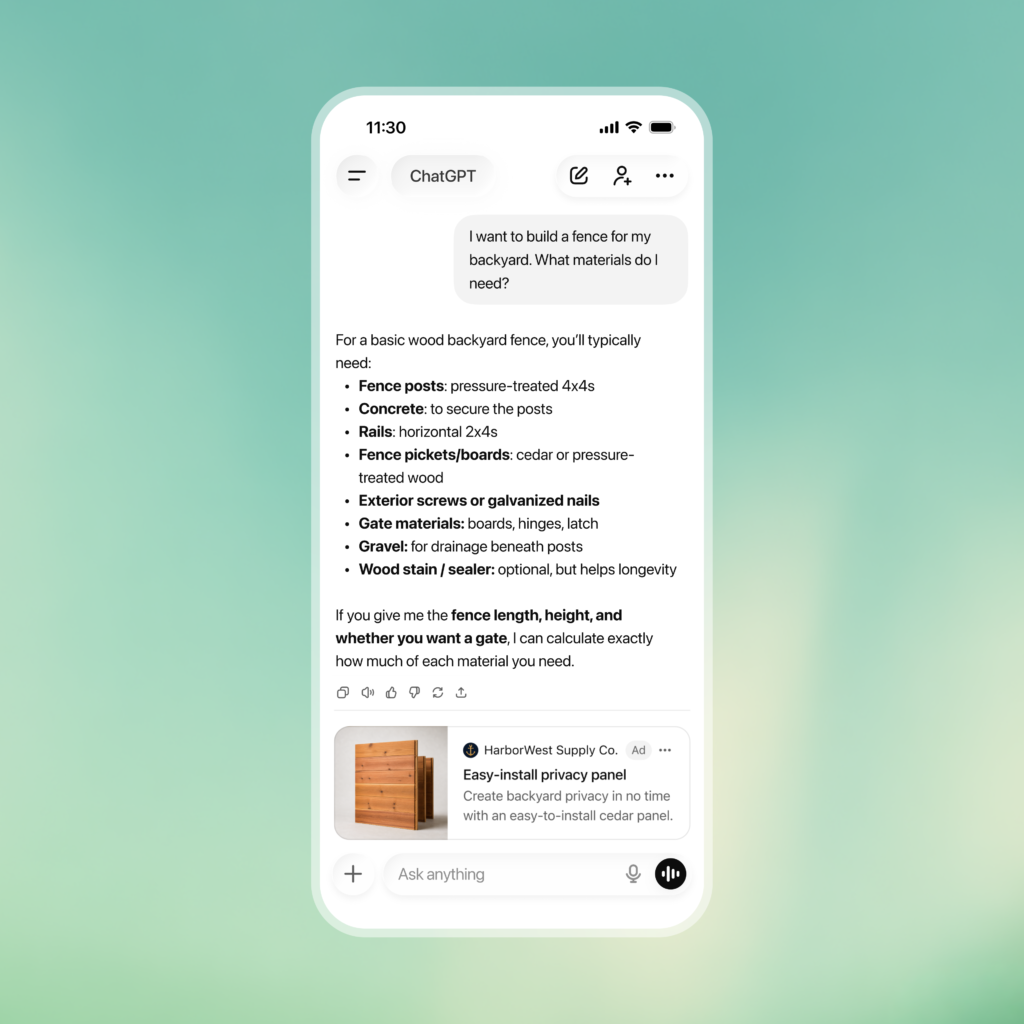
ChatGPT Ads are paid placements displayed within eligible ChatGPT experiences. They can appear below the end of a ChatGPT response when OpenAI’s ads system identifies a relevant match between the user’s current conversation and an eligible advertiser.
The ad is separate from the assistant’s response, clearly labelled as sponsored, and does not influence the answer ChatGPT generates. An ad placement is not an endorsement or recommendation from OpenAI.
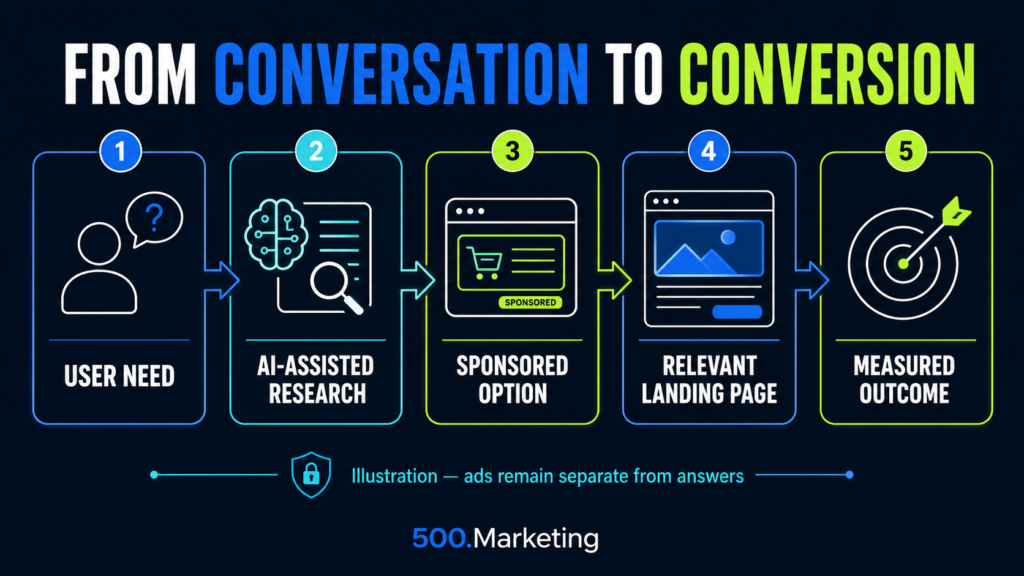
For an advertiser, the basic journey looks like this:
User explains a need → ChatGPT helps frame or research the decision → a relevant sponsored option may appear → user visits the advertiser’s page → the advertiser measures the resulting action
This creates a different advertising environment from a search results page or social feed. A user may not enter a short query such as “CRM software.” They may explain:
“I run a 12-person service business in India. We need a simple CRM that connects with WhatsApp, has pipeline reporting and costs less than ₹3,000 per month.”
That conversation contains the product category, business size, required integrations, use case and budget constraint. ChatGPT Ads are designed to use richer contextual signals such as these while keeping the user’s conversation private from advertisers.
Who sees ads in ChatGPT?
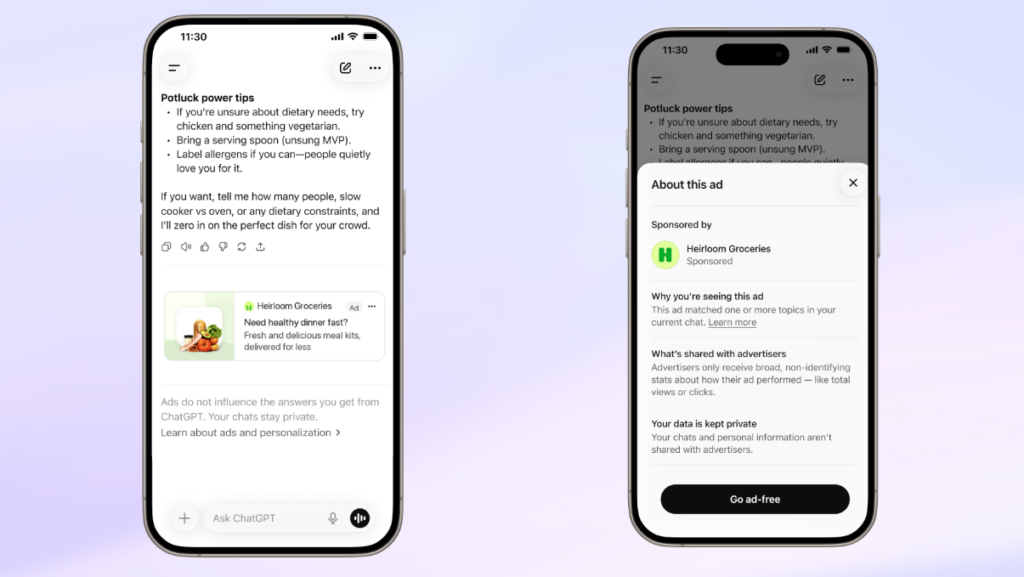
According to OpenAI’s current guidance:
- Ads may appear to users on the Free and Go plans.
- Plus, Pro, Business, Enterprise and Education plans do not show ads.
- Accounts identified as belonging to people under 18 are not shown ads.
- Ads are not eligible to appear near sensitive or regulated conversations such as personal health, mental health or politics.
- Temporary Chats do not show ads.
Users can manage ad personalization, dismiss or report ads, see why an ad was shown and clear the data used for ads. Turning off personalization does not necessarily remove ads; contextual ads may still be selected using the current chat. Depending on regional availability, a Free user may also be offered an ad-free experience with lower usage limits.
Advertisers do not receive a user’s chats, history, memories, name, email address, precise location or IP address. They receive aggregated reporting such as impressions, clicks and measured conversions.
How ChatGPT Ads are selected
OpenAI says its system considers a combination of relevance and advertiser bids. Relevance signals can include:
- The intent and context of the current conversation
- The advertiser’s landing page
- Ad title, description and image
- Context hints supplied by the advertiser
- Geographic and platform targeting
- Custom-audience settings, when used
- Selected signals from the user’s broader ChatGPT experience when ad personalization is enabled
This leads to an important strategic difference:
Context hints are not keywords
Context hints describe what the advertiser offers, who it helps and when it may be useful. They help OpenAI understand the types of conversations or user journeys for which an ad could be relevant.
They are not exact-match controls. Adding a phrase does not guarantee that the ad will appear whenever a user writes those words.
Weak context hint:
Digital marketing agency
Stronger context hint:
Performance marketing support for Indian ecommerce brands that are generating traffic from Google and Meta but struggling with high acquisition costs and low purchase conversion rates.
The stronger version describes the audience, current situation, problem and intended outcome. It gives the delivery system more useful meaning without pretending to control a precise search query.
The Conversation-to-Conversion Fit framework
Before opening Ads Manager, evaluate whether the channel matches how your customers make decisions. At 500.Marketing, I would assess ChatGPT Ads across four dimensions:
1. Decision depth
Does the customer need to understand, compare or configure the solution before buying?
Products and services with meaningful trade-offs—software, courses, travel, home services or considered ecommerce purchases—can naturally enter detailed conversations. A low-consideration commodity may provide less conversational depth.
2. Constraint density
Do buyers normally specify several requirements such as budget, location, use case, compatibility, delivery time or experience level?
More genuine constraints can create clearer relevance signals. This does not guarantee performance, but it improves the logical fit between a detailed conversation and a specific offer.
3. Decision proximity
Is the user merely learning, or are they close to evaluating providers and taking action?
“What is email marketing?” represents broad learning. “Which email tool supports 50,000 contacts, WhatsApp integration and Indian billing?” is closer to a commercial decision. Your ad and landing page should be built for the latter moment without making exaggerated claims.
4. Destination readiness
Can the landing page answer the next question immediately?
If an ad promises a comparison, calculator, specific plan, product or consultation, sending the user to a generic homepage breaks the journey. Conversational relevance is wasted when destination relevance is weak.
Practical scoring: Rate each dimension from 1 to 5. A business scoring 16–20 has a stronger conceptual fit for an early test. A lower score is not an automatic rejection, but it signals that Google, Meta or another established platform may deserve priority.
This is a planning framework, not a performance benchmark.
Which businesses should test ChatGPT Ads in India?
Subject to OpenAI’s current advertising policies, the strongest early use cases include:
Ecommerce with considered purchases
Furniture, electronics, home improvement, specialist equipment and products with several specifications may benefit when buyers need help comparing options. Product feeds may also become useful for ecommerce advertisers operating at scale.
Travel and experiences
Travel decisions naturally contain destination, dates, budget, travellers, activities and comfort preferences. An ad leading to the exact package or itinerary discussed can be more useful than a generic destination page.
Education and digital products
Courses, certifications, learning platforms and productivity products can match conversations about skills, careers, workflows and specific learning outcomes—provided the claims are accurate and policy-compliant.
Local and home services
Users often explain the task, location, urgency, property type and required outcome. This can create high-context opportunities for eligible service providers.
Software and selected B2B solutions
Software evaluation frequently involves integrations, team size, workflow, security, features and pricing. ChatGPT Ads can be relevant when the advertiser has a focused landing page and a measurable trial, demo or lead event.
Who should not rush into ChatGPT Ads?
ChatGPT Ads may not be the next channel to fund if:
- Your category is prohibited or heavily restricted.
- Your website cannot clearly explain the offer or establish trust.
- You cannot install conversion measurement.
- You do not know your target CPA, contribution margin or lead value.
- Your offer depends on exaggerated claims, urgency tricks or misleading comparisons.
- Your existing Google or Meta campaigns still have obvious tracking, landing-page or follow-up problems.
- You expect mature-platform targeting depth or stable benchmarks from a beta product.
OpenAI’s current policies focus primarily on consumer categories such as household and consumer goods, local services, travel and experiences, digital products and education. Gambling, political content, alcohol, tobacco, adult services and several other categories are disallowed. Health, financial and legal services face strict restrictions; OpenAI currently states that many such services outside the United States are generally prohibited. Individual job and housing listings are also prohibited.
Always review the current policy before creating the account, creative or landing page.
ChatGPT Ads vs Google Ads vs Meta Ads
| Dimension | ChatGPT Ads | Google Ads | Meta Ads |
|---|---|---|---|
| Primary environment | Conversation and assisted decision-making | Search, shopping, video and web inventory | Social feeds, stories, reels and messaging |
| Main intent signal | Conversational context and user journey | Search query, audience and behaviour signals | Audience, engagement and creative response |
| Advertiser input | Context hints, creative, landing page, targeting and bid | Keywords, feeds, audiences, creative and bid | Audiences, creative, event data and bid |
| Strongest conceptual role | Research, comparison and consideration moments | Existing demand capture and broad multi-format reach | Demand creation, visual discovery and retargeting |
| Maturity | Beta | Mature | Mature |
| Benchmark availability | Limited | Extensive | Extensive |
The right question is not “Which platform is best?” It is:
Where does my customer express the clearest intent, and which platform can reach that moment with acceptable economics?
Google can remain the priority for explicit search demand. Meta can remain stronger for visual discovery and creative-led demand generation. ChatGPT Ads introduce an additional opportunity around conversational research and decision support.
ChatGPT Ads campaign structure
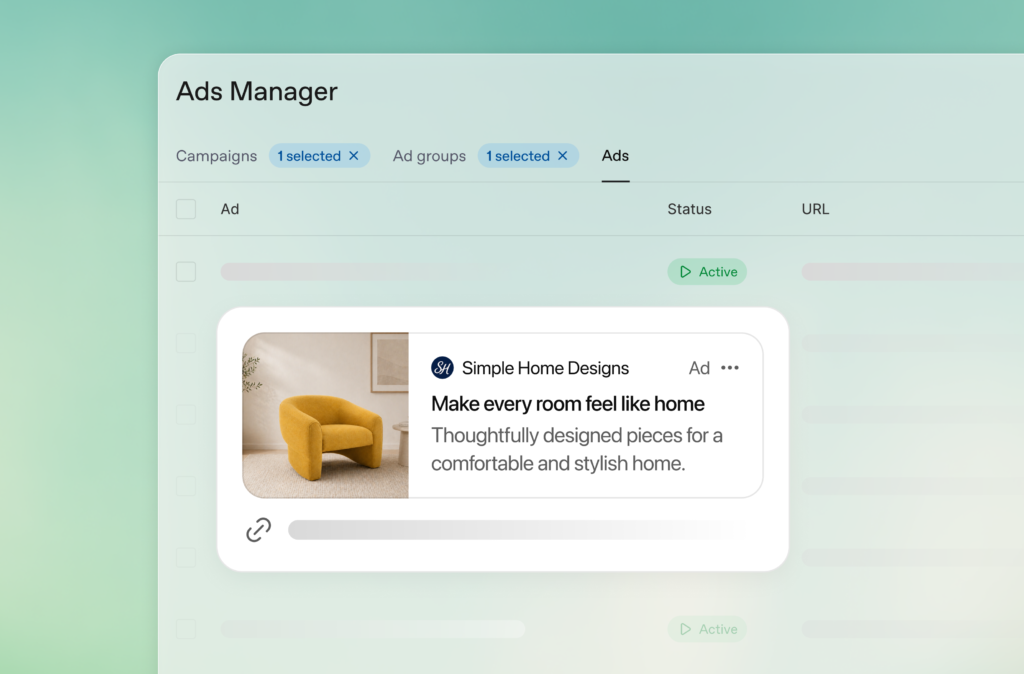
The current structure is straightforward:
Campaign
The campaign contains the objective, conversion event when applicable, budget, dates, targeted countries, optional platform targeting and optional custom audiences.
Ad group
The ad group organizes ads around one product category, theme, audience need or intent area. Context hints are added here.
Ad
The ad contains the title, description, image and destination URL.
Avoid placing unrelated products or use cases inside one ad group. If two offers require different messages or landing pages, separate them. Create several meaningfully different ads per ad group rather than changing only one word.
Campaign objectives and buying models
OpenAI currently documents three campaign objectives:
| Objective | How it is bought | Best used for |
|---|---|---|
| CPM | Cost per 1,000 impressions | Reach, visibility and awareness |
| CPC | Cost per valid click | Website traffic and engagement |
| oCPC | Conversion-optimized cost per click | Driving a selected post-click conversion event |
With oCPC, the system optimizes towards users more likely to complete the selected conversion, but the advertiser still pays per valid click—not per conversion.
Do not choose oCPC merely because conversions sound preferable. First confirm that the conversion event is implemented correctly, fires only when the intended action occurs and produces data that can guide optimization.
How much do ChatGPT Ads cost in India?
The published minimum daily campaign budget for accounts billed in INR is ₹725 per day. This is a minimum permitted budget, not OpenAI’s recommended test budget and not evidence that ₹725 will generate a conversion.
Advertisers can select a daily budget or campaign-total budget. A daily budget is treated as an average over seven days. OpenAI states that daily spend may reach up to twice the selected daily amount on an individual day, while spend across the applicable seven-day period will not exceed seven times the daily budget, subject to adjustments when budgets change.
OpenAI has not published reliable CPC, CPA, conversion-rate or ROAS benchmarks across Indian industries. Any article promising a typical Indian ChatGPT Ads CPC or guaranteed cost per lead at this stage should be treated cautiously.
Use economics, not invented benchmarks
Calculate the maximum CPC your funnel can afford:
Maximum affordable CPC = Target CPA × Landing-page conversion rate
Hypothetical example:
- Target CPA: ₹2,000
- Expected landing-page conversion rate: 5%
- Maximum affordable CPC: ₹2,000 × 0.05 = ₹100
This does not predict what ChatGPT Ads will charge. It defines the economic boundary beyond which the campaign would miss its target, assuming the conversion rate and downstream quality remain stable.
For lead generation, replace “conversion” with a qualified lead or completed sale—not a low-quality form submission. For ecommerce, evaluate contribution margin and new-customer economics, not revenue ROAS alone.
Step-by-step: How to advertise on ChatGPT in India
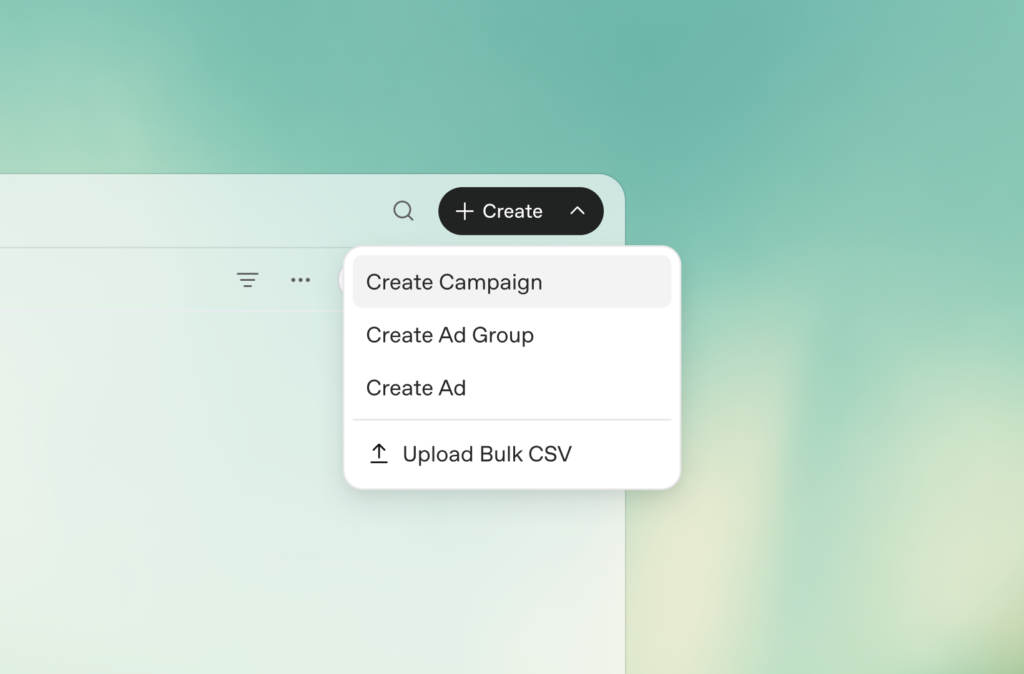
Step 1: Create the advertiser account
Visit ads.openai.com and sign in using an OpenAI account connected to your work email. One account owner should create the advertiser account, after which additional team members can be invited.
Step 2: Complete business and account details
Enter the business name, website, logo, industry, country, billing currency and time zone. Review these carefully. OpenAI says the country, currency and time zone cannot currently be changed after the advertiser account is created.
Step 3: Complete verification
Provide the requested verification information. Account verification and account review are separate steps, so completing identity verification does not necessarily mean campaigns can launch immediately.
Step 4: Configure billing
Create the billing profile and add the card that matches the business entity and billing country. ChatGPT Ads currently uses postpaid billing, charging the saved payment method after spend accrues and reaches the account’s assigned payment threshold or at month-end.
Step 5: Install measurement before launch
Create a Pixel ID in the Conversions section. Install the base Measurement Pixel across relevant pages and trigger supported events when meaningful actions occur. For stronger server-side reliability, evaluate the Conversions API.
At minimum, also add consistent UTM parameters to every destination URL and validate the complete journey in your analytics platform.
Step 6: Create the campaign
Choose one commercial goal, the appropriate CPM, CPC or oCPC objective, budget type, start and end dates, supported locations and the platforms on which the campaign can run: web, Android and/or iOS.
Sub-country targeting options vary. Confirm currently supported regions, cities or postal codes using the location picker rather than assuming every Indian location is available.
Step 7: Create focused ad groups
Build each ad group around one intent area. For example, a CRM company might separate:
- CRM for WhatsApp-led sales teams
- CRM for small service businesses
- CRM migration from spreadsheets
Each theme represents a different problem and deserves its own context hints, message and landing page.
Step 8: Write natural context hints
Use a simple structure:
Person or business + situation + constraint + desired outcome
Example:
Small Indian service businesses managing leads in spreadsheets that need a simple CRM with WhatsApp integration, automated follow-ups and pipeline reporting.
Add only authentic use cases. Context hints should improve relevance, not disguise an ineligible or misleading offer.
Step 9: Build distinct ad variations
Effective ChatGPT ad copy should be specific, useful and benefit-led. Each variation should test a different reason to choose the offer:
- Functional benefit
- Ease or speed of setup
- Compatibility or integration
- Price or plan transparency
- Proof or trust
- A use-case-specific outcome
Avoid generic claims such as “Best solution,” “Revolutionary platform” or “Guaranteed results.” The title, description, image and landing page should communicate one coherent promise.
Step 10: Send traffic to the closest-matching page
Use a relevant product, service, collection, comparison or content page—not the homepage by default. Include UTMs in the destination URL. Make sure the page is reachable and does not block OpenAI’s OAI-AdsBot or OAI-SearchBot.
Step 11: Submit for review and monitor delivery
After approval, check whether the campaign, ad groups and ads show as Serving. Initial reporting can include impressions, clicks, spend, CTR, average CPC, average CPM and conversions when measurement is configured.
Do not judge performance from one day or one attractive top-line metric. Review the entire path from delivery to qualified business outcome.
How to write better ChatGPT Ads
A conversational placement should answer the user’s likely next question. Use this copy framework:
Relevance
State who or what the offer is for.
Specific value
Explain the practical benefit, not an abstract slogan.
Qualification
Mention a meaningful feature, starting price, location, compatibility or constraint when appropriate.
Next action
Give the user a low-friction, accurate next step.
Example for a hypothetical analytics platform:
Title: See Google and Meta profitability in one dashboard
Description: Connect ad spend, orders and margins to identify which campaigns are producing contribution profit—not just platform ROAS. View the setup guide.
Destination: A page explaining supported integrations, reporting methodology, plans and setup.
The copy works because it explains the audience problem, differentiating value and next step without claiming guaranteed profit.
Conversion tracking and attribution
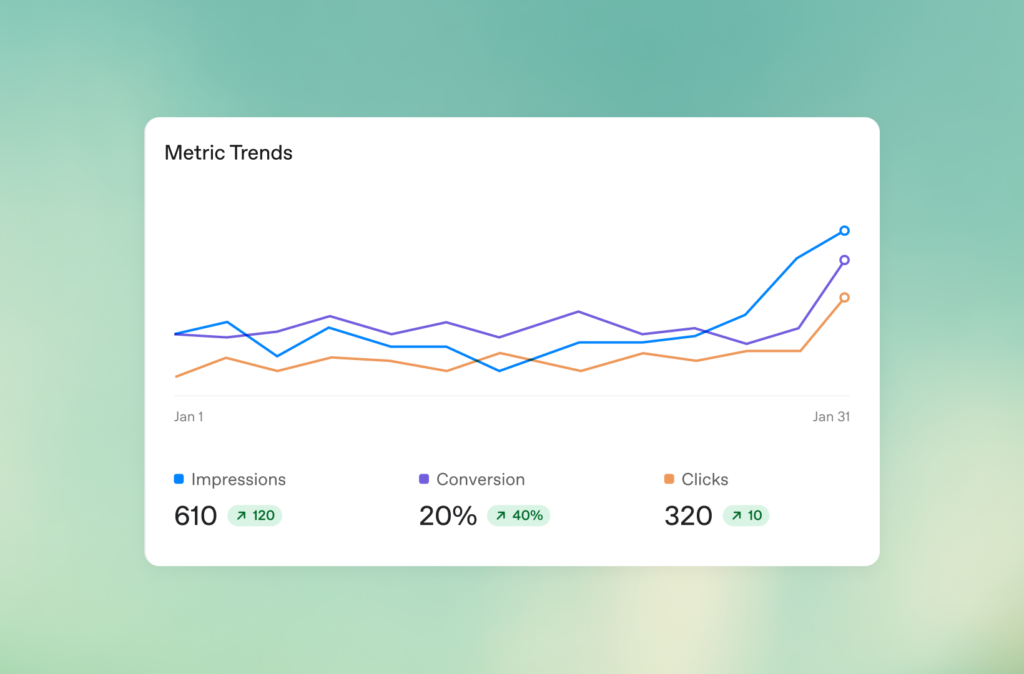
ChatGPT Ads can be measured using:
- OpenAI Measurement Pixel for browser-side events
- OpenAI Conversions API for server-side events
- Supported standard or custom conversion events
- UTM parameters and an independent analytics platform such as GA4
- CRM or ecommerce revenue data for lead-quality and customer-value analysis
The Measurement Pixel is initialized using a Pixel ID and sends events when actions occur. OpenAI documents both click-through attribution and, where available for the account, one-day view-through reporting. Click-through conversions remain the basis for the main Conversions metric, CPA, post-click conversion rate, bidding and conversion optimization.
For important transactions, browser and server events should use a consistent event ID so duplicate events can be recognized. Consent requirements and applicable Indian privacy obligations should be reviewed before sending customer identifiers or enabling advanced matching.
Recommended measurement chain
ChatGPT ad impression/click → tagged landing-page session → primary website event → qualified lead or order → CRM/revenue validation
Platform-reported conversions answer only part of the question. The business must still determine whether those conversions became qualified opportunities, customers and profitable revenue.
Custom audiences: useful, but not an SMB shortcut
OpenAI allows advertisers to create custom audiences using supported customer or prospect identifiers. Audiences can be used for campaign inclusion, exclusion or ad-group bid adjustments.
However, inclusion targeting and bid adjustments require at least 25,000 matched users, and OpenAI recommends at least 100,000 matched users for these use cases. Smaller matched audiences may still be used for exclusions.
For many Indian small and mid-sized businesses, context quality, landing-page relevance and first-party measurement will therefore matter more initially than customer-list targeting.
Only upload first-party data for which the business has the necessary rights, notices, permissions and legal basis.
A practical 30-day ChatGPT Ads test plan
This plan is designed to create learning without presenting a beta platform as predictable.
Before launch
- Confirm category and landing-page policy eligibility.
- Define one primary conversion and its financial value.
- Establish target CPA or contribution-margin limits.
- Install and test Pixel, UTMs, analytics and CRM capture.
- Create focused ad groups around distinct user needs.
- Prepare multiple genuinely different ad variations.
Days 1–7: Validate delivery and data
Check ad approval, spend pacing, impressions, clicks, destination URLs, event firing and obvious relevance problems. Avoid making daily changes unless delivery or measurement is broken.
Days 8–14: Evaluate relevance
Compare ad groups and creative angles using CTR, CPC, landing-page engagement and conversion quality. A high CTR with weak on-site behaviour may indicate curiosity rather than commercial fit.
Days 15–21: Improve the weakest link
Refine context hints, separate mixed intents, improve message-to-page alignment and pause misleading or clearly weak variations. Do not scale simply because the campaign is spending its budget.
Days 22–30: Make the economic decision
Review:
- Qualified conversion volume
- CPA or cost per qualified lead
- Lead-to-sale or trial-to-paid rate
- New-customer share
- Revenue, contribution margin and payback period
- Incremental value alongside Google and Meta
Then choose one of three actions: stop, continue learning at controlled spend, or expand the winning intent areas. “New platform” is not a reason to keep an uneconomic campaign running.
Common mistakes to avoid
- Treating context hints like exact-match keywords. They inform relevance but do not guarantee placement.
- Combining unrelated offers in one ad group. Mixed intent weakens the message and destination match.
- Sending every ad to the homepage. The next page should continue the specific decision.
- Using oCPC before validating conversion events. Optimization cannot repair incorrect or low-value signals.
- Copying Google Search ads word for word. A conversational environment rewards helpful specificity.
- Using Meta-style visual clutter. OpenAI recommends simple, relevant images that support the message.
- Publishing invented benchmarks. India-specific performance evidence is still limited.
- Ignoring policy differences. Approval on Google or Meta does not imply eligibility on ChatGPT.
- Optimizing only for CTR. Clicks are useful only when they create qualified outcomes.
- Calling ChatGPT Ads a replacement. It is an emerging channel with a different role and less mature evidence.
Is it worth advertising on ChatGPT in India?
ChatGPT Ads are worth a controlled test for an eligible business when customers regularly explain detailed needs, compare options and seek help making a decision—and when the advertiser has accurate measurement, a relevant landing page and clear unit economics.
They are not automatically worth testing simply because ChatGPT is popular or the platform is new. Early adoption creates learning advantages, not guaranteed cheap traffic or high returns.
The most defensible strategy in 2026 is to treat ChatGPT Ads as a measured addition to the media mix:
- Use Google to capture explicit search and shopping demand.
- Use Meta to create and retarget demand through creative distribution.
- Test ChatGPT Ads around conversational research, comparison and decision moments.
The winning platform is ultimately the one that produces qualified, incremental and profitable outcomes for the specific business.
Frequently asked questions
Are ChatGPT Ads available in India?
Yes. OpenAI launched self-service ChatGPT Ads access in India on August 31, 2026, and currently lists India as available in Ads Manager Beta.
How can an Indian business advertise on ChatGPT?
Create an advertiser account at ads.openai.com, enter the business and account details, complete verification, configure billing, install conversion measurement, and then create a campaign, ad group, context hints and ads for review.
What is the minimum budget for ChatGPT Ads in India?
OpenAI currently lists ₹725 as the minimum daily budget for an INR-billed campaign. This is a technical minimum, not a recommended budget or performance guarantee.
How much does a ChatGPT ad click cost in India?
There is no reliable public India-wide CPC benchmark yet. Actual cost will depend on factors including the objective, relevance, bid, competition, targeting and delivery conditions.
Does ChatGPT Ads use keywords?
Not in the conventional Google Search sense. Advertisers use context hints to describe relevant needs and situations, but these are not exact-match rules and do not guarantee placement for a word or phrase.
Do ChatGPT ads change the answer?
No. OpenAI states that ads run separately from the chat model, do not influence the answer and are visually separated and labelled as sponsored.
Can advertisers read users’ ChatGPT conversations?
No. Advertisers do not receive users’ chats, histories, memories or personal account details. They receive aggregated performance reporting.
Which ChatGPT users see ads?
Ads may appear to eligible adults on Free and Go plans. Plus, Pro, Business, Enterprise and Education accounts are currently ad-free. Temporary Chats do not show ads.
Can ChatGPT Ads track purchases and leads?
Yes. Advertisers can implement the OpenAI Measurement Pixel or Conversions API and send supported events. UTMs, analytics and CRM or ecommerce data should also be used to validate performance independently.
Are ChatGPT Ads better than Google Ads?
Neither platform is universally better. Google is mature and strong at capturing explicit search demand. ChatGPT Ads offer a different opportunity around conversational research and decision-making but remain in beta.
Should a small business test ChatGPT Ads now?
Only if its category is eligible, the website is conversion-ready, tracking is accurate and the business knows its acceptable acquisition cost. Fixing those foundations may create more value than adding another platform.
Final perspective
ChatGPT Ads represent a meaningful change in digital advertising: the move from targeting isolated queries or passive feed behaviour towards understanding a user’s stated problem, constraints and decision context.
That potential is real. So are the limitations of a beta platform.
The advertisers most likely to benefit will not be those who copy their Google campaign into a new dashboard. They will be the ones who understand the customer’s decision, write precise context hints, connect each message to the right page, measure the business outcome and resist scaling until the economics are proven.
Performance over promises.
About the author
Hitesh Taneja is Co-Founder of 500.Marketing and a performance marketer with experience across SEO, Google Ads, Meta Ads, landing pages, analytics and conversion strategy. He writes evidence-led breakdowns for founders and marketers who want to make better advertising decisions.
Follow: @hiteshtaneja01
Website: 500.marketing
Want this run on
your accounts?
Tell us what you're working on and we'll suggest a useful next step.